
Bypass vs. Anvil Pruning Shears:
Which Cut Is Right for Your Garden?
Two blades, two philosophies — understanding the difference protects your plants, sharpens your technique, and makes every cut count.
Two Different Cutting Mechanisms
At first glance, bypass and anvil pruning shears may look similar — both fit in one hand, both tackle branches. But open the blades and you'll see two entirely different cutting philosophies shaped by decades of horticultural engineering.
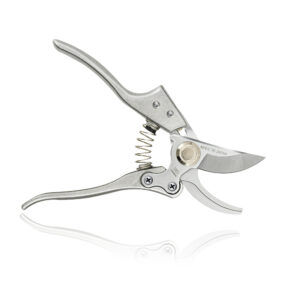
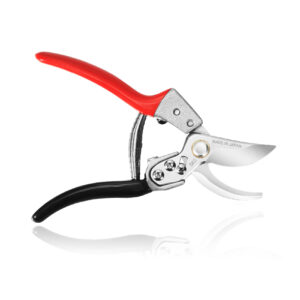
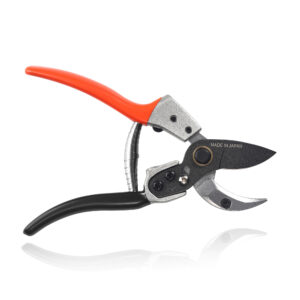
Bypass Pruning Shears
Scissors-style action
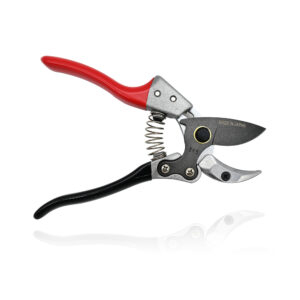
Anvil Pruning Shears
Crushing-style action
Bypass: the scissors principle
Bypass shears operate just like scissors — one sharp upper blade glides past a slightly curved lower counter-blade. The cutting edge never touches the plant tissue it leaves behind; it only contacts the portion being removed. This produces a clean, angled cut with minimal cell damage, allowing the plant's cambium layer to begin healing almost immediately.
Anvil: controlled force
Anvil shears work differently: a single straight blade closes down onto a flat or slightly serrated metal plate (the "anvil"). Rather than slicing, they crush through the material with significant mechanical force — meaning they require far less hand pressure per cut, but leave a wider, more bruised wound on living tissue.
At a Glance: The Critical Distinctions
| Factor | Bypass Shears | Anvil Shears |
|---|---|---|
| Wound on plant | Thin, clean slice — heals fastest | Wider, crushed wound — higher infection risk on live wood |
| Required hand force | Moderate — both hands engaged | Lower — up to 50% less effort per cut |
| Blade sharpening | One cutting edge — straightforward to maintain | One edge, but anvil plate also needs regular cleaning |
| Durability | Blades can bend if twisted under load | More robust — handles torque better |
| Price range | Entry-level to premium | Often lower cost for comparable cutting capacity |
| Arthritis suitability | Harder on hands over extended sessions | Preferred — significantly less grip force needed |
| Japanese craft tradition | Dominant style in Japanese horticulture — prized for precision | Widely used in heavy-duty Western pruning |
Traditional Japanese horticultural practice strongly favors bypass shears — the emphasis on minimal plant trauma and precise, aesthetically clean cuts aligns deeply with the Japanese philosophy of harmony between the gardener and the garden. All TONMA pruning shears are engineered with this principle at their core.
Which Shear Belongs in Which Situation?
Understanding the scenario is more important than brand or price. Here is when each type truly excels:
Rose & flower pruning
The clean slice of bypass blades prevents bacterial entry and promotes rapid callus formation on roses, dahlias, and camellias.
Fruit tree shaping
Precise cuts on young fruit tree branches preserve meristematic tissue, encouraging productive regrowth rather than die-back.
Herb & vegetable harvesting
Delicate herbs like basil and thyme benefit from bypass's non-crushing action, maintaining stem integrity and flavor quality.
Clearing dead wood
Anvil shears excel on dried, dead branches where tissue damage is irrelevant — the crushing force powers through tough material effortlessly.
High-volume work
For extended pruning sessions or users managing large plots, the reduced hand pressure of anvil shears dramatically lowers fatigue.
Arthritis-friendly pruning
The mechanical advantage of anvil action makes garden work accessible for those with reduced grip strength or hand pain.
The one rule every gardener should know
For living plants, always choose bypass. Using anvil shears on green, living wood crushes vascular tissue and creates ragged wounds that invite fungal infections, bacterial rot, and pest entry — undoing months of careful cultivation in a single cut.
Reserve anvil shears for what they do best: dead branches, woody debris, and any material where the biological health of the stem no longer matters.
Keeping Your Shears in Peak Condition
Cleaning after each use
Regardless of type, always wipe the blades with a clean cloth after pruning — especially after cutting diseased material. Plant sap, soil, and moisture are the primary causes of blade corrosion. A light wipe with a camellia oil-dampened cloth (the traditional Japanese method) prevents rust and maintains blade glide across thousands of cuts.
Sharpening bypass blades
Bypass shears have a single sharpened bevel — use a diamond whetstone or honing steel at approximately 20–25° to maintain the cutting edge. Sharpen from the flat face, moving in smooth arcs. A sharp bypass blade should cleanly slice through a piece of paper with no tearing.
Maintaining anvil shears
In addition to sharpening the blade, inspect and clean the anvil plate regularly. Sap buildup on the flat surface causes the blade to drag and increases required force. Use a stiff brush and isopropyl alcohol to dissolve resin. Replace the anvil plate if it develops deep grooves — a damaged anvil accelerates blade wear and causes uneven crushing.
At TONMA, every cutting tool is made from high-carbon Japanese steel — the same tradition used in culinary knives. The metallurgical precision that gives a chef's knife its edge translates directly into garden tools: harder, longer-lasting edges that require less frequent sharpening and maintain superior cut quality across thousands of cuts.